


PVC Stretch Ceiling vs Polyester
- NeviTec Stretch Ceiling

- May 13
- 6 min read
When a ceiling needs to do more than simply cover a slab, the question of PVC stretch ceiling vs polyester becomes a design and performance decision, not just a material choice. In premium interiors, the ceiling often carries lighting, controls acoustics, masks uneven substrates and sets the tone for the whole room. Choosing the right membrane matters because the result is only as strong as the system behind it.
For architects, designers and property owners, PVC and polyester stretch ceilings can both deliver a refined finish. The difference is in how they behave, how they are installed and where each one performs best. If the brief involves integrated illumination, sharp detailing or a highly polished feature ceiling, one material may clearly lead. If the space demands acoustic support, textile character or a colder installation environment, the other may be the stronger fit.
PVC stretch ceiling vs polyester: the core difference
At first glance, both systems can appear similar. Each creates a clean, tensioned surface beneath the structural ceiling, and each can transform awkward overhead zones into controlled architectural elements. The real distinction sits in the material itself.
PVC stretch ceilings use a flexible film that is heated during installation so it can tension precisely into a perimeter track. This creates a taut, highly uniform finish that works particularly well for mirror-like gloss, satin surfaces, printed designs and luminous backlit features. Because the material is heat-formed into position, it can achieve crisp shaping and excellent consistency across large areas.
Polyester stretch ceilings use a fabric membrane, usually finished with a specialist coating, and are typically installed using a cold-fit process. The material has a more textile-based character and is often selected where a softer visual quality or acoustic enhancement is required. Polyester can be very effective in spaces where sound control and understated aesthetics carry more weight than high reflectivity or dramatic lighting effects.
Neither option is universally better. The right answer depends on the role the ceiling has to play.
Finish and visual impact
If visual drama is high on the brief, PVC usually offers the broader design language. It supports ultra-smooth finishes with a level of surface precision that suits hospitality schemes, showrooms, reception areas and high-end residential features. Gloss PVC can amplify light and create a sense of height, while matt and satin versions provide a calmer, more architectural look.
It also opens up stronger possibilities for statement design. Printed membranes, bold colour application, curved forms and seamless-looking illuminated fields are where PVC often stands out. In environments where the ceiling is intended to become a focal point rather than a background finish, that matters.
Polyester tends to feel more restrained. That is not a weakness - in many interiors it is exactly the point. A fabric-based membrane can read as warmer and more understated, which suits offices, meeting spaces, education settings and certain residential rooms where a softer atmosphere is preferred. If the design intent is elegant rather than theatrical, polyester can be the more natural choice.
Lighting integration and translucency
For projects involving integrated lighting, the PVC stretch ceiling vs polyester conversation becomes more technical. Backlighting is one of the strongest reasons specifiers choose a stretch ceiling in the first place, and not all membranes perform the same way.
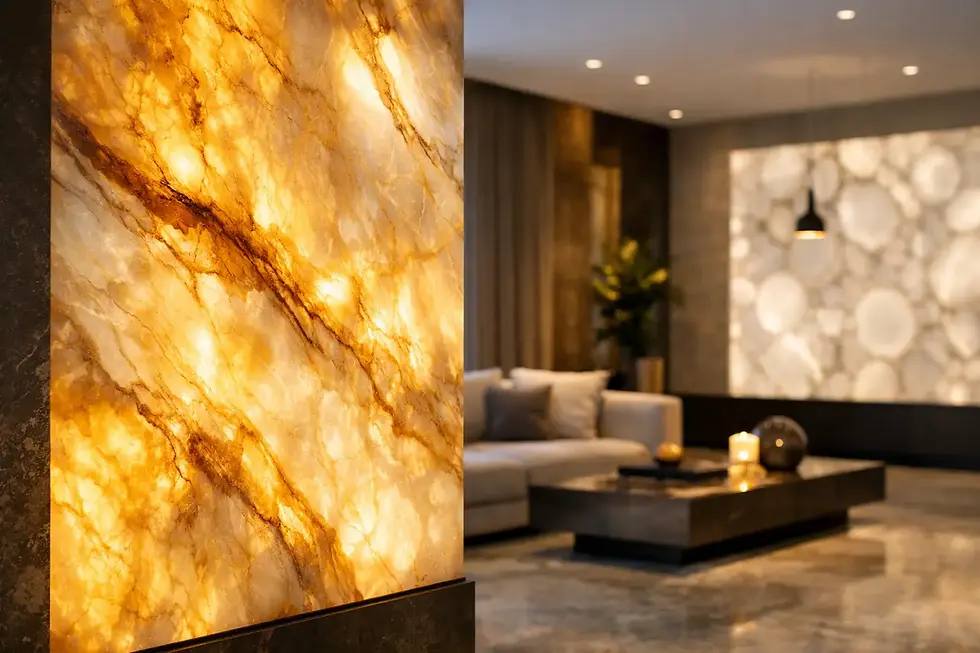
PVC is particularly effective for luminous ceilings and light features. Its consistency, translucency options and ability to tension into precise forms make it well suited to LED integration. Whether the goal is a glowing ceiling plane, a halo effect, or a sculptural lit panel, PVC gives designers more control over diffusion and visual sharpness.
That makes it a powerful option for spas, bars, hospitality interiors, branded commercial spaces and feature zones in residential schemes. The membrane can become part of the lighting design rather than simply sitting around it.
Polyester can also work with lighting, but it is less often the first choice where the lighting effect needs to be highly polished or visually striking. Where the lighting brief is softer, more ambient and less dependent on a perfectly uniform luminous finish, polyester may still suit. It simply tends to be selected for different visual outcomes.
Acoustic performance
Acoustics often shift the decision. In restaurants, offices, cinemas, meeting rooms and leisure spaces, a beautiful ceiling that leaves the room echoing has not solved the problem.
Polyester is commonly associated with acoustic applications because its fabric structure can work effectively as part of a sound-absorbing build-up. Combined with acoustic insulation above the membrane, it can help reduce reverberation and improve comfort without compromising the visual quality of the space. For designers trying to soften hard interiors, that is a major advantage.
PVC can also be used within acoustic ceiling systems, but the specification needs greater care. The membrane type, perforation approach and overall construction determine the acoustic outcome. It is not simply a case of choosing the material on appearance alone. When acoustics are central to the brief, the ceiling system should be engineered as a whole.
This is where specialist manufacturing and technical guidance matter. A membrane is only one component. The track detail, backing, lighting integration and room performance all need to work together.
Installation constraints and programme
Installation method is another practical difference. PVC is installed with heat, which allows the material to stretch and tension accurately into place. This process supports very clean results, especially on complex or feature-driven installations, but it does require the right site conditions and an experienced team.
Polyester is generally installed cold. In some environments, that can make planning simpler and reduce certain site constraints. On live commercial projects or areas with limited tolerance for heat-based installation processes, polyester may offer programme advantages.
That said, installation should never be reduced to which membrane goes in faster. Ceiling geometry, access, lighting, penetrations, acoustics and perimeter detailing often have more impact on the programme than the membrane alone. A premium result depends on coordination, not shortcuts.
Durability, maintenance and room conditions
Both materials are used because they offer a clean, durable alternative to traditional ceiling finishes, but they respond differently depending on the setting.
PVC performs particularly well in environments where moisture resistance and easy cleaning are priorities. That makes it a strong option for swimming pool surrounds, spas, kitchens, washrooms and other humidity-prone interiors. Its smooth surface is also useful in commercial settings where maintenance standards are high and the ceiling must retain a pristine appearance over time.
Polyester can still provide a durable architectural finish, but it is often chosen more for its aesthetic or acoustic behaviour than for moisture-heavy applications. In spaces with normal environmental conditions, it performs well. In rooms exposed to higher humidity, the wider ceiling build-up and product specification need closer consideration.
There is also the question of repair and future access. Stretch ceilings can be designed around services, light fittings and access requirements, but the best outcome comes from planning these details early. The membrane choice should support how the space will actually operate once handed over.
Where PVC tends to lead
PVC is often the stronger choice when the project calls for visual precision, dramatic lighting integration, reflective or high-definition finishes, and dependable performance in humid environments. It is especially well suited to premium hospitality, retail, wellness settings and design-led residential interiors where the ceiling has to make a statement.
In these spaces, the ceiling is part of the architecture, not an afterthought. The ability to combine finish, form and light in a single coordinated surface is what gives PVC its edge.
Where polyester tends to lead
Polyester often comes into its own in acoustically sensitive environments and interiors where a softer, more understated material expression is preferred. Offices, meeting rooms, educational spaces and certain residential applications can all benefit from its fabric-like character and acoustic potential.
It can also be a sensible route where cold installation is advantageous or where the scheme calls for quiet sophistication rather than a feature-led ceiling statement.
The real decision is about the brief
The most useful way to think about PVC stretch ceiling vs polyester is not as a straight product contest. It is a question of intent. Is the ceiling being asked to deliver luminous impact, mirror-like finish and moisture resilience? Or is it there to soften acoustics, support a calmer aesthetic and integrate discreetly into the wider scheme?
The strongest projects start by defining performance priorities before discussing colour or texture. Lighting, acoustic targets, service coordination, room use, maintenance expectations and design ambition all shape the right answer. Once those factors are clear, the material choice usually becomes far more obvious.
For complex interiors, that choice should not happen in isolation. A ceiling may also need to work with acoustic wall finishes, custom light panels and tailored perimeter details. When those elements are considered together, the result is sharper, cleaner and more commercially effective.
A stretch ceiling should solve more than one problem at once. Choose the membrane that serves the architecture, and the ceiling will stop being a surface overhead and start becoming part of the space’s value.


Comments