


Cold Installation Ceiling System Explained
- NeviTec Stretch Ceiling

- May 2
- 6 min read
A ceiling often becomes the compromise in an otherwise resolved interior. Services need hiding, acoustics need controlling, lighting needs integrating, and the finish still has to feel deliberate rather than purely practical. That is exactly where a cold installation ceiling system earns its place. For architects, designers and contractors working on premium spaces, it offers a cleaner route to a refined ceiling surface without the disruption associated with heat-based installation methods.
What is a cold installation ceiling system?
A cold installation ceiling system is a stretch ceiling solution installed without heating the membrane during fitting. In most cases, this points to a polyester fabric system with a specialist coating, tensioned into a perimeter track at room temperature. Unlike PVC stretch ceilings, which typically require heat to make the material pliable enough for installation, cold-fit systems are mechanically tensioned into position.
That difference matters. It affects programme planning, site conditions, access, and even the type of project where the system makes the most sense. In occupied interiors, sensitive environments, or schemes where open heat application is less desirable, a cold-installed solution can be the more practical specification.
The visual outcome is no less ambitious. A properly fabricated and installed membrane creates a taut, elegant plane that can conceal uneven substrates, accommodate integrated lighting, and contribute to acoustic performance when paired with the right build-up.
Why designers specify a cold installation ceiling system
The appeal is not simply that the system avoids heat. It is that the method opens up more control in projects where finish quality and installation constraints are equally critical.
In hospitality settings, for example, fit-out teams are often working to demanding handover dates while multiple trades overlap. A cold installation ceiling system reduces some of the logistical pressure associated with heated installation. In residential interiors, particularly high-end refurbishments, it can also be a better fit where clients are sensitive to disruption and expect a polished process as well as a polished result.
There is also a strong design argument. Stretch ceiling systems allow for clean geometry, minimal visual clutter and close coordination with lighting details. When bespoke fabrication is part of the process, the ceiling stops being a background surface and becomes part of the architectural intent.
How cold-installed ceilings compare with heat-installed stretch systems
This is where nuance matters. Cold-installed and heat-installed stretch ceilings are not competing versions of the same thing in every scenario. They are different tools with different strengths.
Material behaviour and installation method
Cold-fit systems are generally based on polyester membranes. These are tensioned into a track without the need to warm the material first. Heat-installed systems are more commonly made from PVC, which softens during installation and then tightens as it cools.
That means the handling characteristics are different from the outset. Polyester can be well suited to spaces where controlled, room-temperature installation is preferable. PVC remains a highly effective option where its specific finish, flexibility or detailing advantages are better aligned to the brief.
Site conditions and project constraints
If a site is operational, has temperature-sensitive elements, or presents restrictions around heated installation, cold fitting may be the stronger choice. That does not automatically make it superior. It simply makes it more appropriate.
In other cases, particularly where certain glossy finishes, complex forms or specific waterproofing properties are required, a PVC system may still be the better specification. The right answer depends on the room, the performance requirements and the finish the design team is trying to achieve.
Finish, acoustics and lighting integration
Both systems can deliver impressive visual results, but they are not identical in appearance or application. Cold-installed textile membranes often produce a softer, more architectural look, especially in matt finishes. They also integrate effectively into acoustic ceiling strategies when used with sound-absorbing backings or void treatments.
For projects aiming to combine illumination, acoustic control and a precise ceiling finish in one coordinated package, the choice of membrane should always be considered alongside the lighting layout, service access and acoustic target.
Where a cold installation ceiling system performs best
Some environments benefit more obviously than others.
Commercial interiors are a strong example, particularly offices, meeting suites, wellness spaces, showrooms and hospitality venues. These projects often need a ceiling solution that improves the visual quality of the space while helping manage reverberation and conceal uneven soffits or building services.
Residential applications are equally relevant, especially in cinema rooms, kitchens, stairwells and feature living areas where the ceiling plays a major visual role. A cold-installed membrane can introduce a sharper architectural finish without the mess and delay of extensive ceiling remediation.
It is also useful in refurbishment work. Existing buildings rarely present perfect substrates. Slab irregularities, dated finishes and awkward service routes can all undermine the final look of an interior. A stretch system creates a new finished plane below those imperfections, allowing the design to regain control.
Design opportunities beyond a flat white ceiling
One of the biggest misconceptions is that stretch ceilings are only a neat way to hide defects. In premium interiors, they do much more than that.
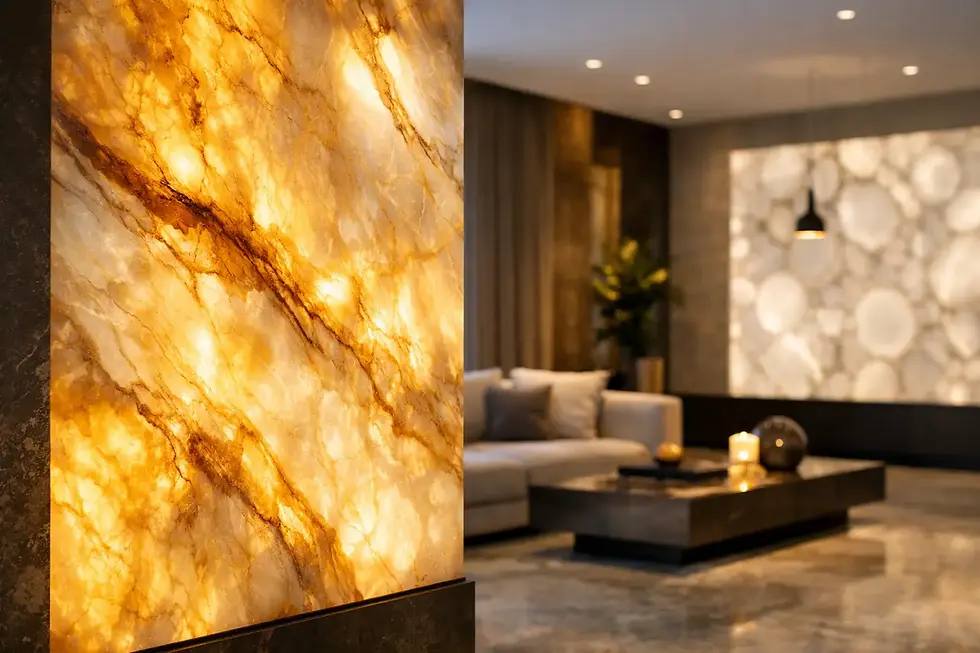
A cold installation ceiling system can be specified in a wide range of colours, printed finishes and light-transmitting options. It can define zones within open-plan spaces, soften hard contemporary interiors with a finer surface texture, or act as the carrier for backlit features that feel integrated rather than added on later.
When ceiling, lighting and acoustics are designed together, the result is stronger. Instead of separate products competing for space, the ceiling becomes the platform that resolves them. That is often where bespoke manufacturing changes the quality of the outcome. Apertures, edge details, track layouts and lighting coordination can all be developed around the actual project rather than forced into standard product limitations.
Practical considerations before specifying cold installation ceiling systems
The specification process should be straightforward, but it should never be casual. A premium finish depends on accurate early decisions.
The first consideration is the substrate and void. Even though the membrane conceals what sits above, the structure still needs to support the perimeter track and any integrated components. Lighting positions, access requirements, sprinkler heads, sensors and ventilation all need coordination before fabrication.
The second is performance. If acoustics matter, the membrane alone is only part of the answer. The overall build-up, including insulation or acoustic absorbent behind the ceiling, will influence the result. If illumination is central to the concept, the membrane’s light transmission and the LED specification must be developed as one system.
The third is detailing. Perimeter lines, junctions with walls, changes in level and transitions into other finishes are what separate an adequate ceiling from an exceptional one. These moments deserve the same design attention as joinery or specialist wall finishes.
The trade-offs worth understanding
No serious specification conversation should pretend every system is right for every project. Cold-installed ceilings come with clear advantages, but they also require informed selection.
If the brief depends on a particular high-sheen aesthetic or highly specialised membrane property associated with another material type, a cold-fit textile system may not be the first choice. If the project includes highly unusual geometry, the design team needs to confirm how the selected membrane behaves across those forms. And if service access is likely to change repeatedly after completion, the ceiling design should allow for that from the start.
This is why product depth matters. The strongest solution is rarely about choosing a ceiling in isolation. It is about selecting the right membrane, track, acoustic backing and lighting integration for the exact demands of the interior.
Why fabrication quality changes the result
Stretch ceiling systems can look deceptively simple once installed. The discipline sits behind the finish. Accurate surveying, careful patterning, clean welds or edging, and exact track manufacture all influence whether the final surface appears calm and precise or slightly unsettled.
That is particularly true on bespoke projects. Large feature ceilings, integrated luminous panels, acoustic rafts and shaped installations all require coordination between design intent and manufacturing capability. A supplier that understands interiors as a complete system, rather than as a set of isolated components, brings far more value to the process.
For specifiers and contractors, that reduces risk. For end clients, it produces a better space.
Cold installation ceiling system and long-term value
The strongest premium interiors are not only striking on day one. They continue to perform. A cold installation ceiling system supports that by delivering a durable, visually controlled finish that can also contribute to acoustic comfort and integrated lighting quality.
That combination is what makes it commercially relevant. In a hotel, it supports atmosphere. In a workspace, it sharpens the visual language while improving comfort. In a private residence, it gives the ceiling the same design authority as the floor, walls and furniture.
At NeviTec, that joined-up thinking is central to how ceiling systems should be approached. The best results come from treating the ceiling as an engineered architectural surface, not an afterthought.
When a project demands precision, restraint and performance in equal measure, a cold-installed system is not simply an alternative installation method. It is often the detail that allows the whole interior to feel resolved.


Comments