

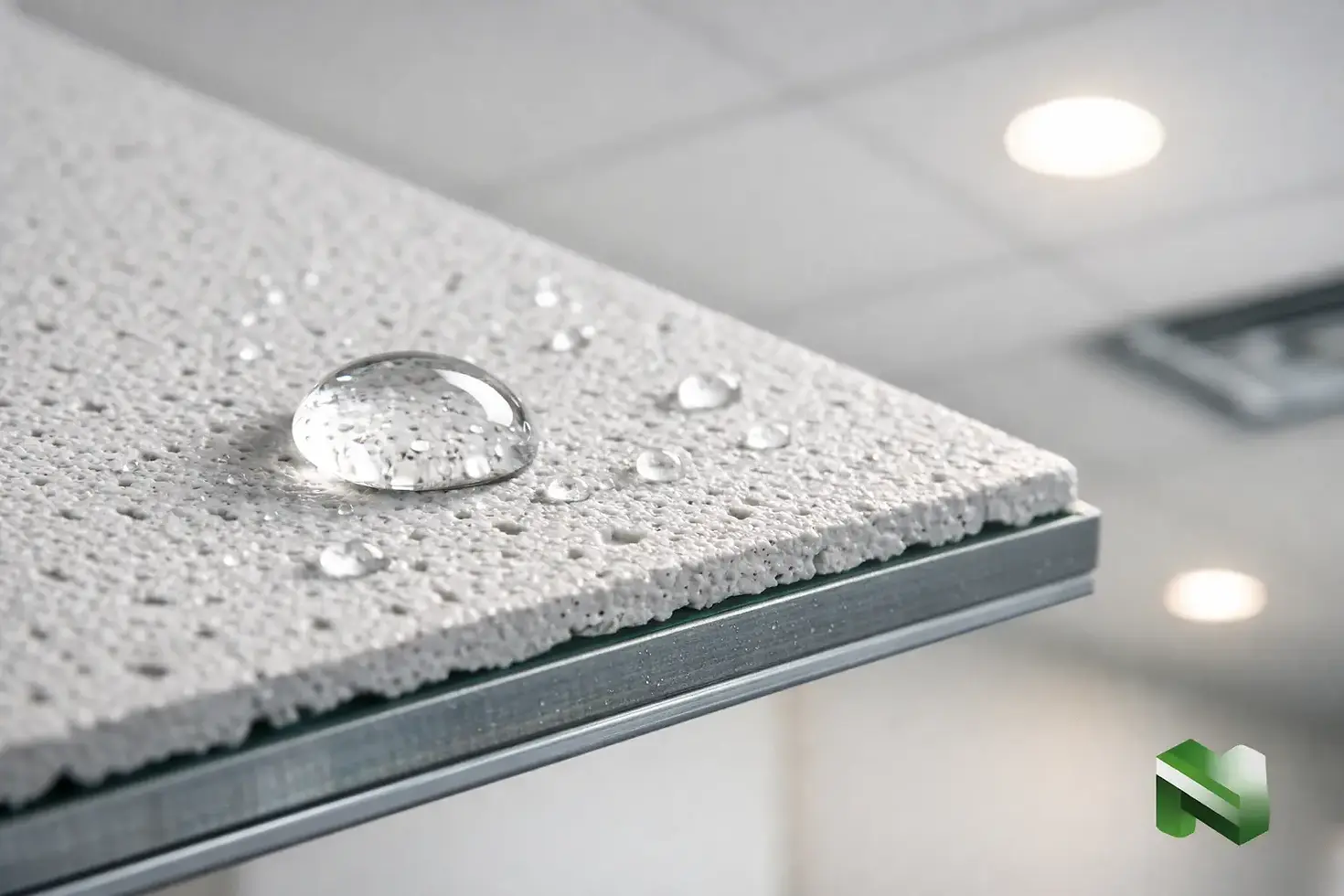
Moisture Resistant Ceiling Systems That Last
- NeviTec Stretch Ceiling

- May 10
- 6 min read
A ceiling usually tells you there is a moisture problem long before the rest of the room does. You see a ripple near the perimeter, a yellowing patch above a shower zone, a tile that begins to sag, or a painted surface that never quite looks clean again. In premium interiors, those failures are more than cosmetic. They undermine the whole finish. That is why moisture resistant ceiling systems matter - not as an afterthought, but as part of a properly resolved interior strategy.
In spaces where humidity, condensation or regular washdown are part of daily use, the ceiling has to do more than cover the structure above. It must hold its line, resist surface deterioration, and work in step with lighting, acoustics and access requirements. The right system protects performance and preserves the visual standard the rest of the scheme is working hard to achieve.
Why moisture becomes a ceiling problem
Moisture reaches ceilings in different ways, and the source affects the specification. In a spa or shower room, the issue is usually sustained humidity and temperature fluctuation. In a commercial kitchen or back-of-house area, airborne vapour, cleaning regimes and service density all play a part. In basements, pool surrounds or poorly ventilated rooms, condensation can be the real culprit rather than direct water exposure.
Traditional ceiling finishes often struggle because they are porous, joint-heavy or dependent on painted surfaces that degrade over time. Plasterboard can stain and soften. Mineral tiles can absorb moisture from the air and lose dimensional stability. Even where failure is not immediate, repeated cycles of dampness and drying can lead to discolouration, microbial growth, delamination and an uneven appearance.
This is where specification needs nuance. Not every humid room needs the same solution, and not every so-called moisture-resistant product performs equally once lighting, maintenance and design intent are brought into the conversation.
What high-performance moisture resistant ceiling systems should deliver
A strong specification starts with the environment, but it should end with a ceiling that still looks intentional years later. At minimum, the system should resist warping, sagging and staining in moisture-prone conditions. It should also support cleaning, maintain a stable finish and integrate cleanly with other ceiling elements.
For architects and designers, appearance matters just as much as durability. A technically suitable ceiling that interrupts the visual language of the space is rarely the right answer. In hospitality, wellness and residential settings especially, the ceiling is part of the experience. In workplaces and retail environments, it influences perceived quality, light distribution and acoustic comfort.
That is why bespoke systems often outperform standard grid-based alternatives. They allow the ceiling to solve multiple problems at once rather than introducing a compromise in one area to fix another.
Material choice changes everything
Material selection sits at the centre of ceiling performance. Non-porous finishes generally cope better with moisture than absorbent ones, but the real question is how the complete system behaves over time. Surface resistance, dimensional stability, detailing and installation method all matter.
PVC stretch ceilings are often specified where humidity resistance and a crisp, flawless finish are priorities. Because the membrane is non-porous and tensioned, it does not behave like a painted board or tile ceiling. It creates a clean, continuous surface that is far less vulnerable to the staining and surface fatigue common in damp environments. It is also particularly effective where designers want reflective or satin finishes to amplify light and sharpen the overall presentation of the room.
Polyester stretch systems can also be relevant, depending on the setting and design brief. They offer a different aesthetic and installation profile, and in some schemes that distinction matters. The point is not that one material is universally better than another. It is that moisture exposure, desired finish, lighting strategy and access expectations should all be considered together.
Where moisture resistant ceiling systems make the biggest difference
Bathrooms and shower rooms are obvious candidates, but this category extends much further. Spa treatment rooms, changing areas, leisure facilities and pool-adjacent spaces all demand careful moisture management. So do hospitality washrooms, salon interiors, food service environments and certain healthcare settings.
In residential projects, kitchens often become overlooked risk zones. Steam, intermittent extraction and open-plan layouts can expose the ceiling to more moisture than many clients expect. A standard painted finish may survive for a while, but it rarely delivers the same long-term consistency as a system designed for the environment.
Commercial interiors raise another layer of complexity. Developers and contractors are often balancing aesthetics, programme pressures, service coordination and lifecycle costs. In those scenarios, a ceiling that resists moisture while accommodating integrated luminaires, acoustic treatment or discreet access can remove friction across the whole project.
Condensation is not the same as water ingress
This distinction matters because it changes what the ceiling needs to do. If there is active water ingress from above, the primary issue is building pathology, not ceiling finish. No decorative system should be expected to compensate for a roof or plumbing failure.
Condensation, however, is a recurring design and environmental challenge. It forms when warm, moisture-laden air meets cooler surfaces, and ceilings are often where the evidence appears first. In those cases, selecting a more stable, moisture-tolerant ceiling surface can significantly improve durability and appearance, especially when paired with proper ventilation and sensible detailing.
Design matters as much as resistance
There is a tendency in technical specification to treat moisture resistance as a narrow compliance question. That misses the point. In premium interiors, the ceiling is not a hidden service zone. It is a design surface.
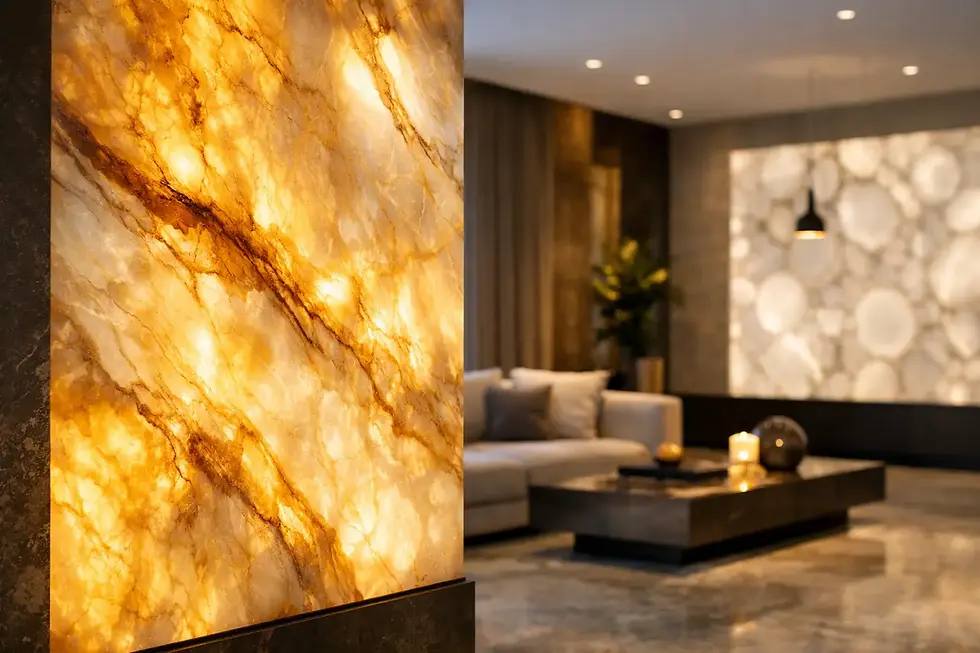
A well-considered ceiling can make a compact bathroom feel taller, give a wellness space a calmer atmosphere, or turn an ordinary reception into a high-impact arrival point. Integrated light panels, backlit features and smooth reflective finishes all contribute to that result. If the chosen ceiling also resists humidity and maintains its surface quality, the design stays convincing long after handover.
This is where specialist fabrication becomes valuable. Bespoke manufacturing allows details to be resolved around bulkheads, curves, service penetrations and lighting layouts without the visual clutter that often comes with modular ceiling systems. NeviTec’s approach is built around that principle - technical performance and visual impact should not be specified separately if the goal is a refined interior.
The trade-offs worth understanding
No ceiling system is right for every setting, and good specification depends on recognising trade-offs early. A highly reflective finish may elevate light levels and visual drama, but it will also make poor detailing more obvious. A concealed, monolithic look can be stunning, but service access needs to be planned properly. Some environments prioritise washability above all else, while others need acoustic absorption to sit alongside moisture control.
Budget discussions also need honesty. The lowest upfront cost is rarely the most efficient route when replacement cycles, maintenance disruption and finish degradation are considered. In customer-facing interiors, visible wear carries a reputational cost as well as a practical one.
That said, over-specification is not smart either. A ceiling for a lightly used en-suite has different demands from one in a commercial changing village or a high-traffic spa. The right answer comes from the actual performance brief, not from choosing the most extreme product on paper.
Specifying for long-term performance
The best outcomes usually come when ceiling design is discussed early, before services and lighting have locked the room into awkward compromises. That allows for proper coordination of perimeter details, luminaires, acoustic requirements and any inspection access the project needs.
It also creates room for sharper visual decisions. Instead of treating the ceiling as a surface to patch around constraints, it becomes part of the architecture. That is especially valuable in interiors where moisture resistance must sit quietly behind a luxury finish.
For specifiers, the key questions are straightforward. What kind of moisture exposure will the ceiling face? How should it be cleaned and maintained? Does it need to integrate light, acoustics or feature detailing? And what visual standard must it hold over time?
Answer those clearly, and the ceiling stops being a vulnerability. It becomes one of the most dependable elements in the room.
A well-specified moisture resistant ceiling system does more than avoid failure. It protects the integrity of the entire interior and gives the design permission to be ambitious without becoming fragile.


Comments