
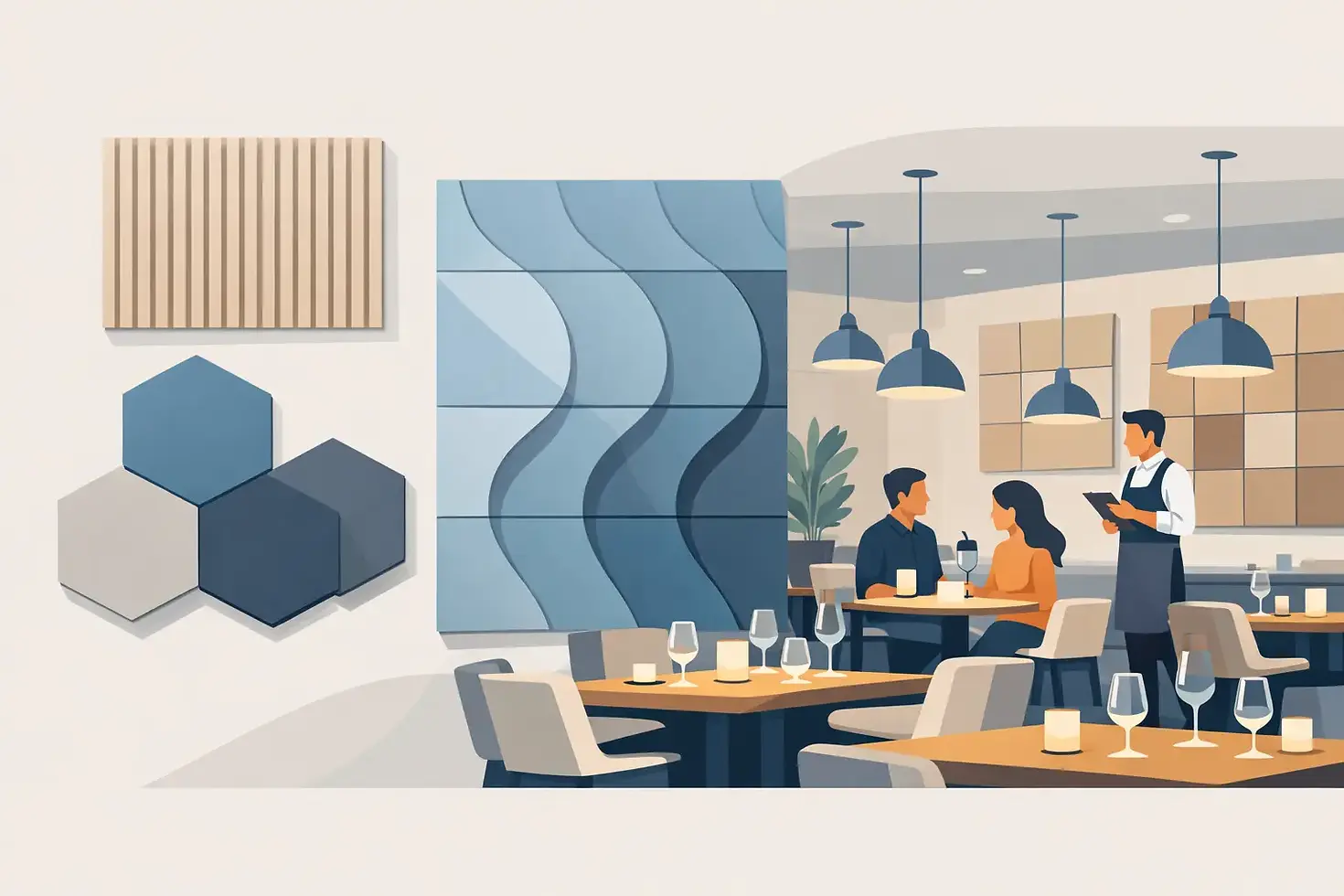
Acoustic Wall Panels Restaurant Design Needs
- NeviTec Stretch Ceiling

- Apr 12
- 5 min read
A restaurant can look exceptional on paper and still fail the moment service begins. Hard flooring, glazed frontage, exposed ceilings and tightly packed covers may create visual energy, but they also amplify every plate strike, chair movement and raised conversation. Acoustic wall panels restaurant designers specify are not a finishing touch. They are part of how the space performs.
For hospitality operators, noise is rarely a minor irritation. It affects dwell time, staff fatigue, guest comfort and the overall perception of quality. If diners need to lean across the table to be heard, the room is not lively - it is working against them. The right acoustic strategy brings control without flattening atmosphere, and wall panels are often one of the most effective ways to achieve it.
Why acoustic wall panels matter in a restaurant
Restaurant acoustics are complex because the room must do two things at once. It needs enough energy to feel alive, while still allowing conversation to remain easy and natural. That balance is difficult to achieve when the interior palette leans heavily on concrete, timber, glass, stone and metal.
These materials are visually strong, durable and popular in hospitality fit-outs, but they reflect sound rather than absorbing it. The result is reverberation - sound bouncing repeatedly around the space. As occupancy rises, the room becomes progressively louder. Guests raise their voices to compensate, which pushes the volume higher again.
Acoustic wall panels interrupt that cycle. By absorbing a portion of the reflected sound energy, they reduce echo and improve speech clarity. That does not mean the restaurant becomes quiet in a flat or clinical sense. It means the noise becomes controlled, more even and far less tiring.
There is also a commercial argument. In premium dining, acoustic discomfort undermines the brand just as quickly as poor lighting or weak service. In casual hospitality, excessive noise can reduce repeat visits even when guests enjoy the food. The acoustic environment shapes memory more than many operators realise.
Acoustic wall panels restaurant projects should not treat as an afterthought
Many hospitality schemes address acoustics too late, once complaints have already started. At that stage, the design team is often trying to solve a structural issue with decorative additions. Sometimes that can work, but the options are narrower and the visual compromises are greater.
When acoustic wall panels are considered at concept stage, they can be integrated into the wider interior language. Panel format, colour, geometry, finish and placement can all be coordinated with lighting, ceiling treatments, joinery and circulation routes. The outcome feels deliberate rather than remedial.
This matters particularly in restaurants where every surface has a role in storytelling. A panel system should not look like a bolt-on fix. It should read as part of the architecture.
The best results come from targeted placement
Not every wall needs treatment, and more absorption is not automatically better. Performance depends on volume, ceiling height, occupancy levels, furniture density and the ratio of reflective to absorbent surfaces. A compact bistro with upholstered seating behaves very differently from a double-height dining hall with polished concrete and exposed soffits.
In many cases, the most effective approach is to focus on first reflection points and the surfaces that drive the strongest bounce-back into the room. Large uninterrupted walls, banquette backdrops, entrance transition zones and private dining areas are often key opportunities. If a bar sits within the same open-plan volume, that area may need its own acoustic response to stop it overwhelming the dining experience.
What to look for in acoustic wall panels for restaurant interiors
A restaurant panel specification has to do more than absorb sound. It must support the design brief, withstand heavy use and fit the practical realities of a commercial environment.
The first consideration is acoustic performance. This should be based on tested material behaviour, not vague claims. Different substrates and systems absorb different frequencies, and restaurants generate a broad mix of sound, with speech intelligibility usually the critical concern. A panel that performs well in the right range will improve how conversations carry at the table.
The second is finish quality. In hospitality, details are visible at close range. Edges, joints, colour consistency and fabrication accuracy all matter. If the project aims for a premium result, the acoustic treatment has to meet the same standard as the joinery, lighting and furniture.
Durability is equally important. Restaurant interiors see constant contact from staff and guests, regular cleaning and occasional impact. Panels must be suitable for the environment in both material selection and fixing method. A visually refined solution still needs to perform under pressure.
Then there is integration. Some schemes benefit from combining wall acoustics with ceiling systems or illuminated features so the room works as one coherent composition. This is where bespoke manufacturing adds real value. Standard off-the-shelf products can solve part of the issue, but they often force the design to adapt to the product rather than the other way round.
Balancing acoustic control with visual impact
There is an outdated assumption that acoustic treatment must be visually soft, muted or secondary. In high-end hospitality, that is simply not true. Acoustic wall panels can be architectural, sculptural and highly tailored to the interior concept.
A refined panel scheme can introduce rhythm to a long dining room, create intimacy around booth seating or reinforce zoning between front-of-house experiences. It can add texture without clutter, or contrast without introducing visual noise. Depending on the project, the right solution may disappear into the scheme or become one of its defining features.
That flexibility is particularly valuable in restaurants where atmosphere is carefully engineered. Day-to-night transitions, lighting scenes, material warmth and customer flow all shape perception. Acoustic surfaces should contribute to that experience, not sit outside it.
For architects and designers, the strongest specifications are often those that combine acoustic function with another design objective. That might mean integrating panels into feature walls, aligning them with linear lighting, or coordinating them with ceiling elements to create a unified language across the interior.
Where restaurant acoustics often go wrong
The most common mistake is assuming that soft furnishings alone will solve the problem. Upholstered chairs, curtains and occupied bodies do help, but in many restaurant layouts they are not enough to offset large reflective surfaces.
Another error is treating all noise as equal. A space can measure busy without feeling uncomfortable if speech remains clear and reverberation is controlled. Conversely, a room can seem chaotic at a lower volume if reflections smear every sound together. Acoustic design is not only about reducing decibels. It is about improving how the room behaves.
There is also a tendency to over-focus on ceilings when wall surfaces are doing much of the acoustic damage. Ceiling rafts and suspended baffles can be highly effective, especially in open-plan hospitality spaces, but they are not always the sole answer. In many schemes, a combination of wall and ceiling absorption delivers the most balanced result.
That is why a project-led approach matters. The right answer depends on the architecture, the operating model and the aesthetic ambition.
Acoustic wall panels restaurant operators can justify commercially
Specifying acoustic treatment is easier when it is framed as a business decision rather than a technical add-on. Guests stay longer in spaces where conversation feels easy. Staff communicate better in rooms with less sonic stress. Private dining becomes more viable. Service feels calmer. The perceived standard of the fit-out rises because the space behaves as well as it looks.
For restaurants with a strong design identity, this is particularly important. Customers may not ask what materials were specified behind the scenes, but they will notice how the room makes them feel. Comfort is part of luxury, even in informal settings.
In bespoke hospitality interiors, acoustic wall panels should be considered early, detailed properly and manufactured to the same standard as every other visible element. That is where specialist expertise becomes valuable. A coordinated solution that addresses acoustics, finish and integration will always outperform a late-stage patch.
NeviTec works in exactly that space - where technical performance and visual ambition need to coexist without compromise.
The smartest restaurant interiors are not simply seen. They are heard, felt and remembered for all the right reasons.


Comments