Architectural LED Light Panels Explained
- NeviTec Stretch Ceiling

- 1 day ago
- 6 min read
A lighting specification can elevate a space or quietly undermine it. The difference often comes down to integration. Architectural LED light panels are not simply luminous surfaces added at the end of a project - they are part of the interior architecture itself, shaping how a ceiling plane reads, how a wall carries light, and how a finished space performs under daily use.
For architects, developers and commercial contractors, that distinction matters. A light fitting can be selected from a catalogue. A panel-based lighting system must be resolved in relation to substrate, detailing, service coordination, access, glare control, moisture exposure and the visual intent of the room. When specified properly, it delivers something more refined than conventional fixtures: broad, even illumination with a seamless architectural presence.
What architectural LED light panels actually are
At their core, architectural LED light panels are engineered luminous surfaces designed to sit within, behind or alongside architectural membranes, ceiling systems or wall assemblies. Rather than producing concentrated points of light, they distribute illumination across a wider area through diffused LED technology. The result is a softer, more controlled field of light that can appear recessive or highly expressive depending on the specification.
That sounds straightforward, but the category covers a wide range of applications. Some panels are designed to mimic skylights in enclosed spaces. Others create continuous bands of illumination across corridors, hospitality settings or reception environments. In luxury residential schemes, they may be used to establish ambient ceiling light without visual clutter. In commercial interiors, they can help achieve a cleaner service zone by reducing reliance on suspended fittings.
What makes them architectural is not the diode technology alone. It is the way the light source is resolved into the built fabric. Dimensions, edge detail, frame visibility, membrane compatibility, acoustic performance and maintenance strategy all become part of the design conversation.
Why architects are specifying architectural LED light panels
There is a reason these systems continue to gain traction in premium interior architecture. They offer a level of visual calm that conventional luminaires often cannot. A ceiling can remain uninterrupted. A wall can glow without obvious fixture points. Large-format surfaces can feel lighter, taller and more composed because the illumination appears embedded rather than applied.
This is particularly valuable in spaces where the ceiling plane carries significant design weight - boardrooms, wellness suites, private cinemas, galleries, flagship retail, and high-end residential open-plan areas. In such settings, fittings that project downwards or compete with the architectural language can feel technically adequate but aesthetically unresolved.
Architectural LED light panels also support more even lux distribution when compared with narrow-beam fittings used in large numbers. That can improve visual comfort, reduce harsh contrasts and create a more balanced atmosphere across occupied zones. In client-facing environments, the effect is often perceived before it is consciously analysed. The space simply feels more complete.
Integration matters more than brightness
One of the most common specification errors is to treat light panels as if performance is measured purely in output. Lumens matter, of course, but they are only part of the story. Panel depth, diffusion quality, colour rendering, driver placement, dimming protocol and thermal management all affect the final result.
A poorly resolved panel may appear patchy, reveal hot spots or create an undesirable halo at its perimeter. Equally, a well-engineered panel can deliver exceptional uniformity while maintaining a very slim visual profile. For projects where finish quality is under scrutiny, especially in luxury development, those differences are immediately visible.
This is where integrated ceiling and membrane systems come into their own. When lighting is coordinated with the surrounding architectural assembly from the outset, tolerances can be controlled properly. The panel reads as part of the whole composition, not as a separate component fighting for alignment.
Architectural LED light panels in stretch ceiling systems
Stretch ceiling applications are one of the most sophisticated environments for architectural LED light panels. Here, the illuminated effect is created through a tensioned membrane that diffuses the light source behind it, producing a smooth, broad luminous field with minimal visual interruption.
The benefit is not purely aesthetic. Stretch systems allow substantial freedom in panel scale, geometry and placement. Designers are not limited to conventional fixture footprints. Large-format illuminated ceilings, floating rafts, backlit features and perimeter light fields can all be created with a much cleaner finish than traditional framed fittings.
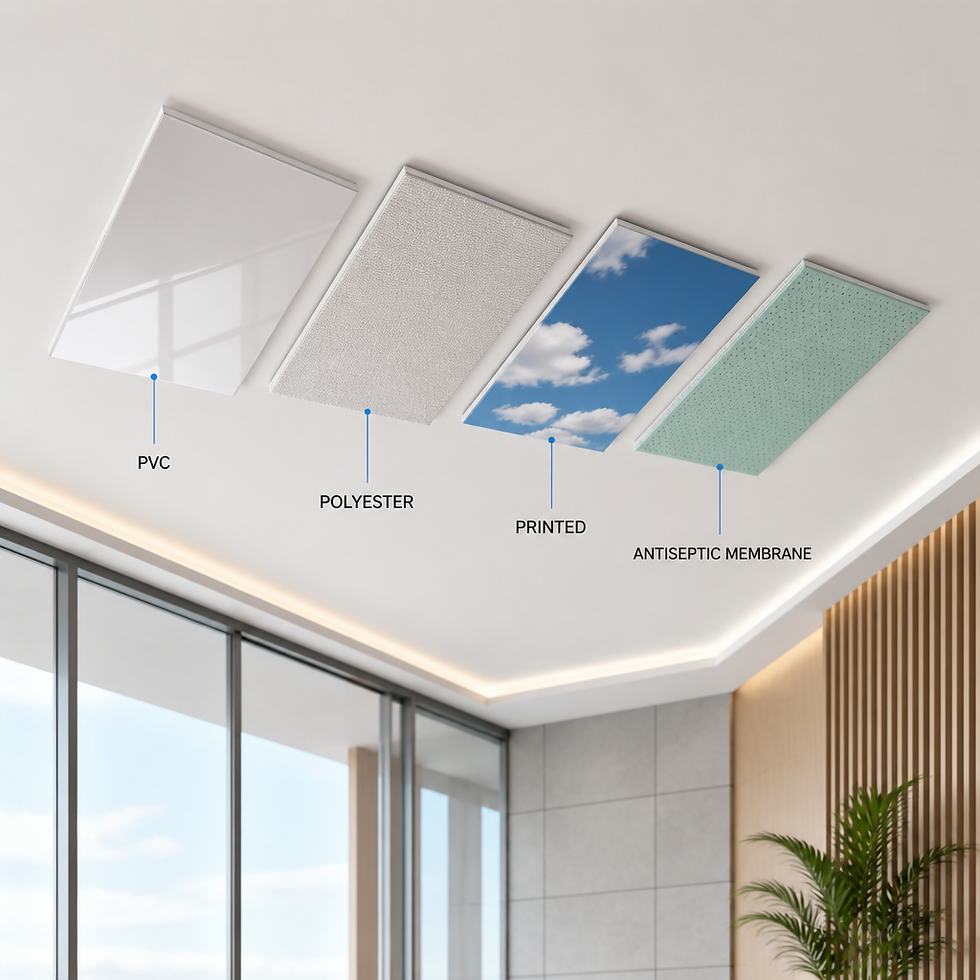
Material selection remains important. PVC-based membranes may be advantageous where moisture resistance, washability or specific gloss levels are required. Polyester fabric systems can offer greater strength, impressive span capability and excellent print fidelity where visual customisation is part of the brief. The right choice depends on the space, the structural context and the intended finish.
In high-specification hospitality and residential projects, this approach allows lighting, ceiling design and environmental performance to operate as a single architectural system rather than three separate disciplines.
Acoustic performance and illuminated surfaces
One of the more interesting developments in this category is the combination of architectural LED light panels with acoustic ceiling technology. In open-plan workplaces, cinemas, hospitality lounges and wellness environments, illumination cannot be considered in isolation from sound.
A beautifully lit room that suffers from excessive reverberation is still a compromised room. Micro-perforated architectural membranes offer a more advanced route. They allow sound waves to pass through an apparently seamless surface into concealed acoustic backing, while also supporting integrated lighting effects. That means the ceiling or wall can contribute simultaneously to visual refinement and spatial reverberation control.
This is especially useful in schemes where traditional acoustic rafts or bulky absorbers would conflict with the desired aesthetic. Instead of choosing between clean lines and high acoustic performance, specifiers can work towards both.
Where these systems perform best
Not every interior requires an illuminated architectural surface. In some utility-led settings, conventional fittings remain entirely appropriate. But where the project places value on spatial experience, visual continuity and finish quality, panel-based lighting offers clear advantages.
In corporate environments, they can sharpen reception spaces, meeting suites and executive areas while improving visual comfort. In luxury residential projects, they help maintain uncluttered ceiling lines and can bring daylight-like softness into rooms with limited natural light. In spas and wellness spaces, diffused illuminated ceilings can support a calmer ambience while pairing effectively with moisture-resistant systems. In retail and hospitality, they provide a powerful way to define identity without relying on overt decorative fixtures.
The key point is that application should drive specification. A luminous ceiling in a private cinema requires a different approach from a backlit feature wall in a hotel lobby. Output, control, access and acoustic strategy should all be tailored accordingly.
Common trade-offs to consider
There is no single best solution for every scheme. Architectural LED light panels offer significant design freedom, but they also require discipline in coordination.
Access is one consideration. If drivers and control gear are concealed above a finished membrane or within a ceiling void, maintenance planning must be addressed early. Another factor is colour consistency. Across large illuminated surfaces, even minor variation can be noticeable, so manufacturing quality and binning standards matter.
Budget is not the right lens for evaluating these systems in premium projects, but value engineering is still real. Large-format illuminated architecture can reduce the number of visible fittings and simplify the visual language of a space, yet it may increase the need for early-stage detailing and specialist installation. That is not a drawback so much as a reminder that these are engineered assemblies, not decorative afterthoughts.
Dimming and controls also deserve attention. A panel that looks exceptional at full output but performs poorly at low levels may fail in hospitality or residential settings where mood and scene setting are essential.
Specifying for a better result
The strongest outcomes usually come from early collaboration between architect, lighting designer, contractor and specialist interior systems partner. That allows practical issues to be solved before they become site constraints.
Panel dimensions should be developed in relation to the room geometry rather than forced into arbitrary module sizes. Edge detail should align with the architectural language of the project - whether the intent is frameless minimalism, a recessed reveal or a more defined feature expression. Structural support, ventilation, emergency lighting integration and control interfaces should all be mapped early.
This is also the stage where material compatibility becomes critical. The membrane, diffuser, LED configuration and acoustic backing must work together as one system. When they do, the finished result feels effortless. When they do not, the flaws tend to appear in light quality, shadow lines, maintenance complexity or visual inconsistency.
For that reason, firms such as NeviTec approach these installations as part of a broader architectural interior system rather than as isolated lighting products. That mindset is often what separates a technically adequate ceiling from a truly resolved one.
Architectural LED light panels are at their best when they disappear into the architecture while transforming the experience of the room. If the goal is a space that feels precise, calm and fully considered, the right question is not which panel to buy, but how the illuminated surface can become part of the architecture from the very beginning.


Comments